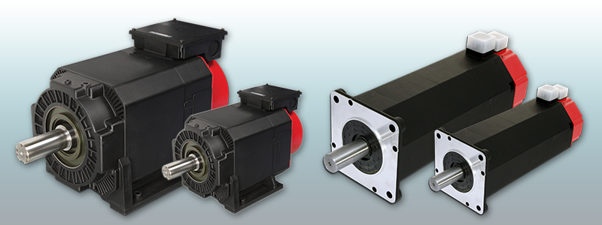
A failing servo motor does not always stop cleanly. It may hesitate, drift, overheat, reset or behave normally for long stretches before the fault reappears under the right load or duty cycle. That makes the question “how do I know if my servo motor is bad” less simple than it sounds, especially when production pressure limits inspection time and confidence. Read on to find out more.

What Makes Servo Motors Different To Diagnose?
Unlike a standard induction motor, which simply needs to run at a set speed, a servo motor works as part of a closed-loop system: it constantly reports its position and speed back to a controller via an encoder or resolver, and the controller adjusts the signal in real time to keep the motor exactly where it should be. This is what makes servo motors so precise for robotics, CNC machines and automated production lines, but it also means a fault can originate in several different places at once, in the motor itself, the feedback device, the cabling, or the drive interpreting the signal. Separating those possibilities is what makes servo diagnosis harder than a standard motor check.
Track The Conditions That Trigger The Fault
The practical answer to “how do I know if my servo motor is bad” is to look for patterns. One trip, noise or positioning error may have several possible causes. A fault diagnosis becomes more convincing when the same behaviour returns under similar conditions: a certain speed range, load cycle, temperature, direction change or start-up sequence. This pattern helps separate a developing servo motor fault from a wider control, drive or application issue.
Treat Intermittent Running As A Diagnostic Clue
Servo motors can be difficult to diagnose because they may not fail consistently. A unit can run normally during a short check, then drift, hesitate or reset once the machine is back in production. Intermittent faults can come from winding deterioration, feedback instability, thermal expansion, contamination, damaged cabling or encoder signal problems. This means maintenance teams should carefully record when the issue appears, how long the machine has been running, whether the load has changed, and whether the fault disappears after cooling.
Compare Commanded Position With The Actual Response
A useful check is whether the motor is doing what the controller is asking it to do. Servo faults often show up as a gap between the commanded position and actual response, e.g. overshoot, lag, hunting, following errors, unstable stopping or poor repeatability. These behaviours can point to a motor issue, but they can also come from drive tuning, load changes, mechanical backlash or cable faults. That is why engineers should review the alarm history, position error trends and axis behaviour during acceleration, deceleration and hold conditions before deciding that the servo motor itself is failing.
Act Before The Fault Spreads Through The Axis
If the fault profile does point to the servo motor, it is worth acting quickly. A “bad” servo motor can place extra strain on the wider machine. If the motor is struggling to hold position, deliver torque or respond cleanly, the symptoms may begin at the axis but spread into couplings, gearboxes, belts, bearings or the driven load. Early testing helps prevent a contained electrical or feedback problem from becoming a larger mechanical repair. If the symptoms keep returning, specialist servo motor repair services can help test the unit, assess whether the fault is internal, and advise whether repair, recalibration or wider axis investigation is the correct next step for your application.
Don’t Forget Your Backup Motors
It is easy to focus diagnostic effort only on the unit that is currently causing problems, but backup or spare servo motors held on-site can develop faults of their own while sitting idle, particularly if they have not been tested since they were last removed from service. A motor that looks fine in storage is not necessarily fine electrically or mechanically. Testing spares on the same basis as an in-service motor means a genuine fault is not discovered for the first time during an emergency swap, which is exactly the moment a site can least afford it.
What Next?
RJW can test and diagnose servo motor faults quickly, using specialist expertise and Octava Engineering’s Origin system to identify problems without disassembling the motor. Origin works by mounting sensor nodes directly onto the motor housing to run a full diagnostic sweep, covering rotor, bearings, winding, feedback, magnetism and alignment, and produces computer-generated reports with empirical data and measured results, rather than a subjective pass/fail call. Because servo motors typically only run for short periods, workshop-based testing like this is often the only reliable way to catch an intermittent fault before it becomes a bigger repair. That means faster answers, less downtime, and greater confidence that the right repair is carried out the first time.
Contact our team today to arrange specialist testing and get a clearer diagnosis before repair interventions are made, or book your free Origin servo motor health check to find out exactly what condition your servo motor, or your backup unit is really in.

Image Source: Envato