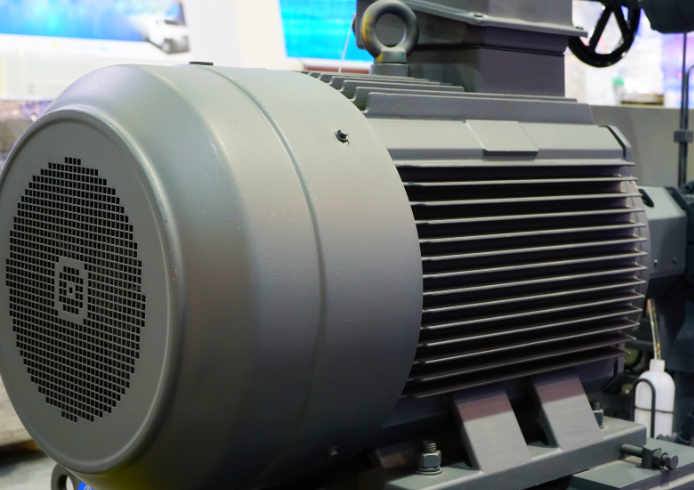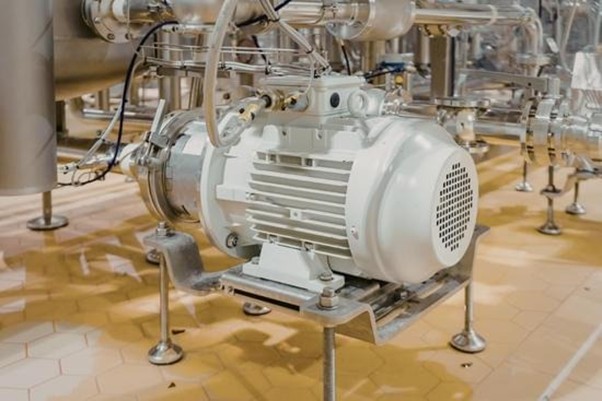
Electric motors are a little bit like your heart, they have a vital role to play and they work constantly in the background but you probably don’t give them an awful lot of thought day-to-day.

Yet for modern industry they’re a mainstay of operations, from pumps and compressors to conveyors and production lines, providing the mechanical power needed to keep your operations moving smoothly. Getting the right motors in place from the outset will reap benefits for your industrial processes, offering you a superior level of performance, productivity and control.
If you’re specifying new equipment or reviewing existing systems, understanding the benefits of electric motors can help you improve efficiency, reduce costs and increase reliability across your site.
Efficient And Reliable Power For Your Operations
One of the biggest advantages of an industrial electric motor is its ability to deliver efficient and consistent power. Electric motors convert electrical energy into mechanical motion with relatively low losses. This means more of the energy you use is turned into productive output, helping to keep your processes efficient and cost-effective.
Because of their relatively simple design, electric motors also tend to be highly reliable. With fewer moving parts compared to alternative drive systems, there is less opportunity for mechanical failure.
For you, this means equipment that performs consistently under load, even in demanding conditions with less chance of unplanned downtime disrupting manufacturing schedules. Whether your operation runs continuously or in cycles, reliability at this level is essential for maintaining productivity.
Greater Control And Process Stability
Electric motors also offer a high degree of control which, when used alongside variable speed drives and control systems, allows you to adjust speed and torque with precision. This gives you much greater control over how your equipment operates, helping to maintain stable and consistent processes. In manufacturing environments, even small variations in speed can affect product quality. For example, a conveyor belt moving too slow or fast on a production line can lead to misaligned labels, products being over or under filled and seals not applied correctly.
Being able to control motor output accurately helps reduce these variations and improves overall consistency. It also reduces mechanical stress on equipment. Sudden starts, stops or load changes can place strain on components, but controlled operation helps minimise this, supporting longer equipment life and fewer breakdowns.
Lower Operating And Maintenance Costs
Cost efficiency is another key reason why electric motors are so widely used. Because they operate efficiently, electric motors typically consume less energy than more complex or less optimised systems. Over time, especially in high-duty or continuous applications, this can lead to significant savings on electricity costs.
Maintenance requirements are also relatively straightforward. With fewer components to manage, routine maintenance tends to focus on key areas such as bearings, lubrication and cooling systems. For you, this means fewer unexpected issues and more predictable maintenance schedules. Instead of reacting to breakdowns, you can plan maintenance in a way that fits around your operations.
Durability In Demanding Environments
Industrial environments are rarely gentle on equipment with exposure to dust, moisture, temperature changes and continuous operation all taking their toll. Electric motors are designed with this in mind. They can be specified for a wide range of operating conditions, from clean indoor environments to more challenging industrial settings.
Whether you need a motor that can handle heavy loads, operate at specific speeds or withstand environmental factors, there are options available to suit your application.
This flexibility is one of the reasons electric motors for industrial applications are so widely adopted across different sectors, from manufacturing and processing to utilities and infrastructure.
Supporting Long-Term Performance
Another important benefit of electric motors is their ability to deliver reliable performance over the long term. When properly maintained, electric motors can operate efficiently for many years. Their compatibility with condition monitoring and predictive maintenance techniques also makes it easier to track performance and identify potential issues early. For example, monitoring vibration, temperature or electrical performance can highlight developing faults before they lead to failure.
This allows you to take action at a convenient time, avoiding disruption to your operations. By combining efficient design with proactive maintenance, you can maximise the lifespan of your equipment and reduce the need for costly replacements.
A Smart Choice For Modern Industry
When you look at the overall picture, the advantages of electric motors are clear. They provide efficient, reliable power, offer precise control, reduce operating and maintenance costs and perform well across a wide range of environments. This combination makes them an ideal choice for modern industrial applications where performance and efficiency are critical.
Understanding the benefits of electric motors allows you to make informed decisions about your equipment, helping you optimise performance, improve reliability and keep your operations running smoothly. To learn more about how we can help you with your electric motors, please Contact us for more information.
Image Source (URL): Canva