Supporting A High-Speed Rocket Propulsion Project
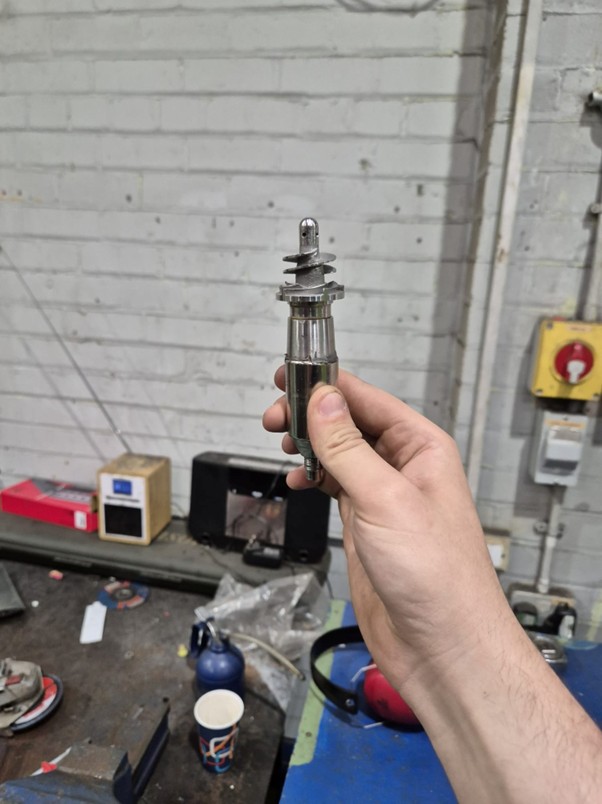
When the Leeds University Rocketry Association (LURA) began developing a new rocket propulsion system, they faced a critical engineering challenge. Their design required a compact pump capable of delivering both fuel and oxidiser to the rocket engine at extremely high rotational speeds.

To operate reliably, the pump’s rotor assembly needed to spin at over 30,000rpm. At these speeds, even the smallest imbalance could cause vibration, instability or mechanical failure. With our experience in precision dynamic balancing, LURA turned to us to ensure the component could perform safely during testing.
A Small Component With Big Engineering Challenges
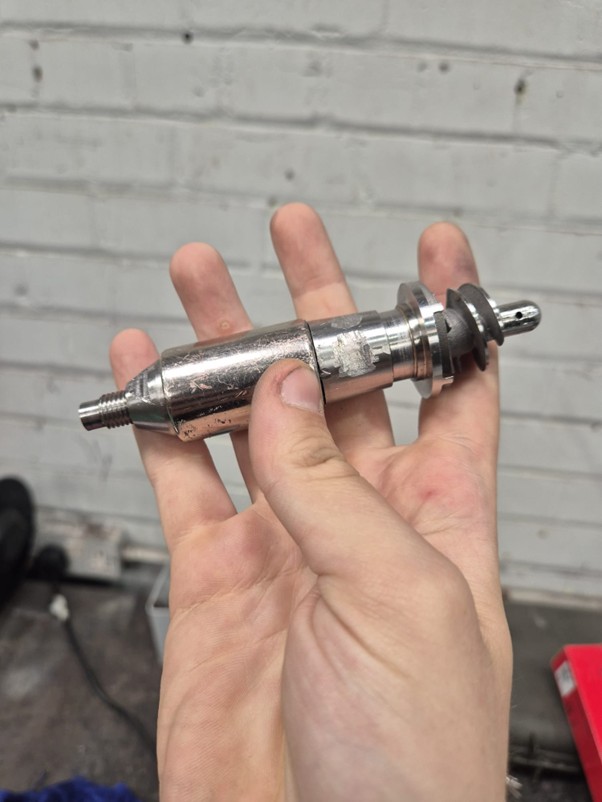
Although the rotor assembly itself was relatively small, the balancing challenge was anything but simple. The assembly measured just 130mm in length and weighed under 400 grams, yet it had to operate at extremely high rotational speeds. Achieving stable operation required the rotor to be dynamically balanced to a tight ISO tolerance.
In high-speed rotating equipment, even tiny mass variations can generate significant centrifugal forces. These forces increase rapidly as speed rises, meaning that components operating at tens of thousands of revolutions per minute must be balanced with exceptional accuracy. For the LURA team, achieving this level of precision was a non-negotiable before the pump could move forward to further testing.
Additional Complexity From Magnetisation
As the balancing process began, another challenge reared its head. The rotor assembly was strongly magnetised, an unavoidable feature of the pump’s design, but this introduced complications during the balancing process.
Magnetic interference affected the balancing machine’s velocity sensors and drive motor, making it difficult to obtain accurate readings during rotation. Combined with the rotor’s small size and high-speed requirements, this created a highly specialised balancing challenge.
Why Conventional Balancing Was Not Enough?
Dynamic balancing corrections are usually made by removing or adding small amounts of material at the ends of the rotor. However, in this case there was very limited material available at the rotor ends. This meant that large correction adjustments were not possible.
Instead, the balancing process needed to be carried out gradually and with extreme precision.
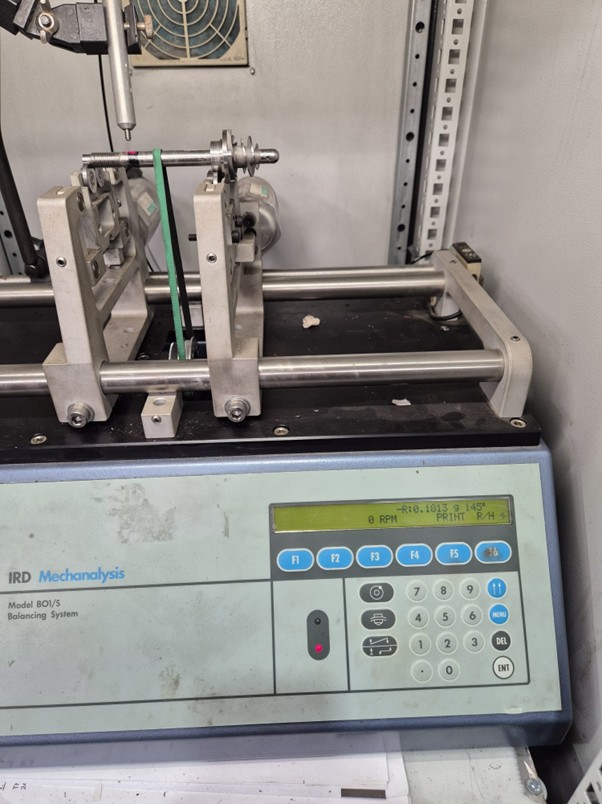
To overcome this, RJW implemented an incremental balancing procedure, allowing the rotor components to be balanced step-by-step as the assembly progressed. This approach ensured that small imbalances could be identified and corrected early in the process before the final rotor system was completed.
A Precision Engineering Solution
Using the incremental method, RJW carefully balanced each stage of the rotor assembly to maintain the necessary tight tolerances throughout the process. To address the magnetisation issue, the team also developed a custom balancing mandrel and shielding arrangement. This solution allowed the rotor to be mounted securely on the balancing machine while minimising interference from its magnetic properties. The shielding helped protect the machine’s sensors and drive system, allowing accurate measurement data to be captured during the balancing process.
With these solutions in place, RJW was able to progressively refine the rotor balance until the assembly reached the required tolerance. Once the incremental balancing stages were complete, the rotor assembly was fully built and a final trim balance was carried out to achieve the ultimate precision required for operation.
A Successful Result
The project delivered a fully balanced rotor assembly capable of operating safely at the high rotational speeds required for the rocket fuel pump. With the balancing complete, the LURA team were able to continue developing their propulsion system and move forward with further testing.
The icing on the cake was the recognition the project received at the Race 2 Space Competition, an initiative aimed at supporting university design and innovation in the UK Space sector. The pump design received the Best Technical Achievement Award, highlighting both the technical achievement by LURA as well as the importance of precision engineering in supporting these ambitious projects.
Engineering Support For Cutting-Edge Innovation
Even when components are relatively small, the performance requirements can be extremely demanding. Achieving reliable operation often depends on precision processes such as dynamic balancing, carried out with the right equipment and expertise.
By working closely with the LURA team, RJW was able to help overcome the unique challenges presented by the rotor assembly’s size, speed and magnetic properties.
The result was a balanced rotor system capable of supporting the next stage of development for an innovative rocket propulsion project. To find how we can help you with your exciting project, please Contact Us!