Predictive maintenance is entering a new era, fuelled by rapid advancements in technology. These developments may offer you considerable opportunities to enhance operational efficiency and reduce unexpected downtime. But what does the future hold for this vital practice? Let’s take a look.

AI And Machine Learning Are Redefining Accuracy
One of the most significant trends shaping the future of predictive maintenance is the growing role of artificial intelligence (AI) and machine learning. These technologies enable predictive maintenance systems to analyse vast amounts of data in real-time, spotting patterns and anomalies that humans might otherwise miss. The results typically include enhanced fault prediction, proactive insights, and the process optimisation.
Integration With Industrial IoT And 5G networks
The combination of Industrial IoT and 5G is set to revolutionise maintenance applications, providing faster, more reliable connectivity for real-time condition monitoring across multiple assets. The results of this can include greater connectivity, scalability, and the opportunity for multiple-site monitoring. This is ideal for medium and large sites, as well as multi-site operations and facilities in harsh environments.
Cloud Adoption Boosting Accessibility
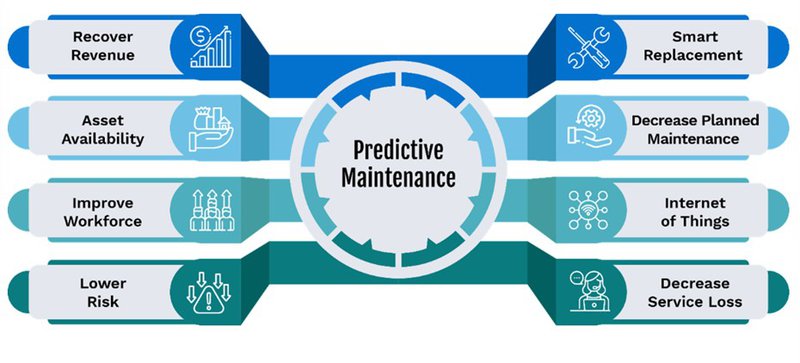
The future of predictive maintenance-focused AI lies heavily in cloud infrastructure. Cloud platforms are making advanced analytics and diagnostics more accessible for manufacturers of all sizes, including small and medium-sized enterprises, who previously may not have had the tools or resources to implement them effectively. You are probably already aware of the cost-efficiency of this approach, but it can be amplified by the ripple effect of data insights and remote diagnostics, both of which can enhance accuracy and reduce in-house maintenance costs.
Seamless System Integration
Future predictive maintenance solutions are expected to integrate directly with critical operational tools such as Enterprise Resource Planning (ERP) and Supervisory Control and Data Acquisition (SCADA) systems. This is a treasure trove of possibilities, combining automated work orders, streamlined procurement protocols, and advanced safety measures. By automating these processes, maintenance workflows become more efficient and costly interruptions are significantly reduced, delivering greater value and seamless adoption. Integration with ERP, SCADA, and Computerised Maintenance Management Systems (CMMS) enables near-instant predictive actions, driving proactive and smarter operations.
Leveraging ‘Big Data’ analytics
When considering predictive maintenance using big data, the shift extends beyond fault detection to informed decision-making based on actionable insights. Big data analytics processes vast datasets generated by Industrial IoT, empowering you to glean insights from factors such as the operational patterns of your equipment, your environmental conditions, and your accurate maintenance records. This can allow for more nuanced predictions and drastically improved performance metrics.
Government Initiatives
Programs like the UK’s Made Smarter initiative aim to accelerate the adoption of predictive maintenance, ensuring that this advanced practice is accessible not only to large enterprises but also to SMEs. Government-backed schemes and the application of big data analytics are demystifying predictive maintenance, allowing businesses of all sizes to achieve greater operational excellence.
Unlock Predictive Insights Today
The future of predictive maintenance offers manufacturers transformative opportunities to revolutionise asset management. For engineering managers, embracing these innovations means boosting operational efficiency and achieving exceptional returns on maintenance investments.
At Rewinds & J. Windsor & Sons, we specialise in predictive maintenance solutions that provide real-time insights, effortless system integration, and measurable cost savings. Get in touch to discover how we can support your success.