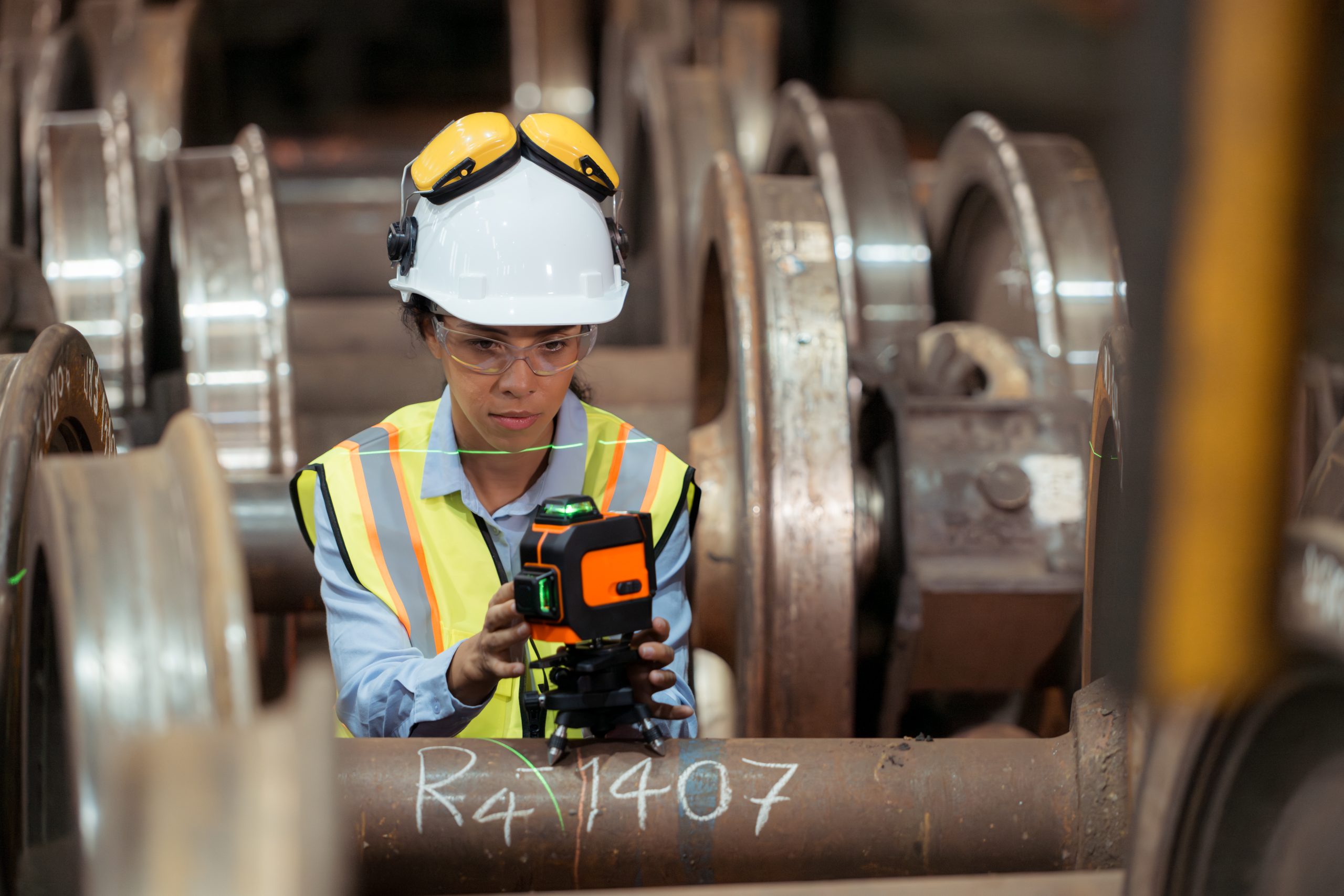
Laser alignment is usually considered when a rotating asset has already started to show symptoms: vibration, heat, coupling wear, bearing damage or seal failure. The issue is that those symptoms often appear at the component level, while the cause sits in the relationship between the machines. Before deciding whether professional laser alignment services are needed, therefore, it helps to understand what the method actually measures, how correction is made and why it gives engineers more certainty than basic alignment checks. Read on to find out more.

What Is Laser Alignment?
Laser alignment is a precision method used to align the centreline of two connected rotating shafts, such as a motor shaft and pump shaft. The goal is to make sure the driving and driven equipment are positioned correctly in relation to one another, so power transfers through the coupling without avoidable strain on bearings, seals, shafts or connected components. Misalignment can be angular, where the shafts meet at an angle, or offset, where the shafts are parallel but not on the same centreline. In many installations, both conditions can appear together, and even small alignment errors can increase vibration, heat, coupling wear and bearing load once the equipment is running.
How Laser Alignment Works
Laser alignment uses a laser transmitter and detector, usually mounted to the shafts or coupling hubs of the connected machines. As the shafts are rotated, the system measures the relative position of each shaft and calculates how far the movable machine needs to be adjusted. The readings show whether correction is needed horizontally, vertically or both, and can also help identify base-related issues such as soft foot, where a machine rocks on its mounting points rather than sitting flat. Engineers can then make controlled adjustments by moving the machine and, where required, adding or removing shims under the machine feet. The system gives live feedback during the adjustment, so the engineer can see whether each correction is bringing the shafts closer to the required alignment. A final reading is normally taken once the adjustment is complete. This gives the site a documented result, which is especially valuable after installation, overhaul or repeated mechanical failure.
How Laser Alignment Differs From Other Alignment Methods
Laser alignment differs from basic manual checks because it measures shaft position rather than relying on visual judgement. A straightedge or feeler gauge can identify obvious coupling misalignment, but it cannot provide the same level of measured correction across both horizontal and vertical planes.
It also differs from dial indicator alignment. Dial indicators can be accurate when used by experienced engineers, but they are slower, more sensitive to setup conditions and require more manual calculation. Laser alignment systems calculate the correction more directly and give immediate feedback as the machine is adjusted. This makes laser alignment especially suitable for industrial rotating equipment where accuracy, repeatability and documentation are important. It gives your engineers a clearer basis for correcting the alignment rather than simply confirming that something appears to be out of position.
What Are The Main Signs That Your Operation Could Benefit From Laser Alignment?
When repeated component failure points to alignment: Repeated bearing, coupling or seal failure is a strong reason to invest in professional laser alignment services. These parts may be replaced correctly and still fail early if the shafts continue to run out of position. The visible fault may be a worn coupling, a leaking seal or a noisy bearing, but the underlying issue can sit in the geometry of the connected equipment. Laser alignment helps confirm whether shaft position is placing unnecessary load on components that should be running under controlled conditions.
When installation, repair or overhaul has disturbed the assembly: Alignment should be checked after new installation, motor replacement, pump overhaul, coupling work or any repair that separates connected rotating equipment. Once an assembly has been moved, lifted, rebuilt or reconnected, the shaft relationship should be measured again. Misalignment may not cause an immediate failure, but it can shorten component life and increase mechanical stress once the asset returns to normal duty.
When the drive train shows signs of strain: A misaligned assembly can make the drive train work harder. That strain may appear as vibration, heat, increased power draw, coupling wear or noise. These symptoms do not prove misalignment on their own, but they do justify alignment as part of the investigation. Professional laser alignment gives engineers a specific answer to one important mechanical question: are the connected shafts positioned correctly? If they are not, correction can be made before another bearing, coupling or seal is replaced without addressing the cause.
When you need a verified commissioning baseline: Laser alignment is also valuable before a new or overhauled asset is handed back to production. A final alignment report gives the site a verified starting condition. If vibration, heat or premature wear appears later, maintenance teams can investigate from a known baseline rather than questioning whether the installation was correctly aligned in the first place.
Next Steps
Our team can inspect your rotating equipment and carry out professional laser alignment where required, either on-site or in our workshops, on a 24/7/365 basis. To find out more, please click here to send us a message, or call our office.